━━ SYS.04 — Fire Detection
Seconds decide outcomes.
Detection buys them.
Fire detection is a life safety discipline, not a product category. A well-designed system senses smoke, heat and other combustion phenomena in their earliest stages, raises the alarm with certainty, and sets the evacuation and response in motion, while resisting the false alarms that erode trust in any system.
━━ Overview
Detection is a system, designed for its building.
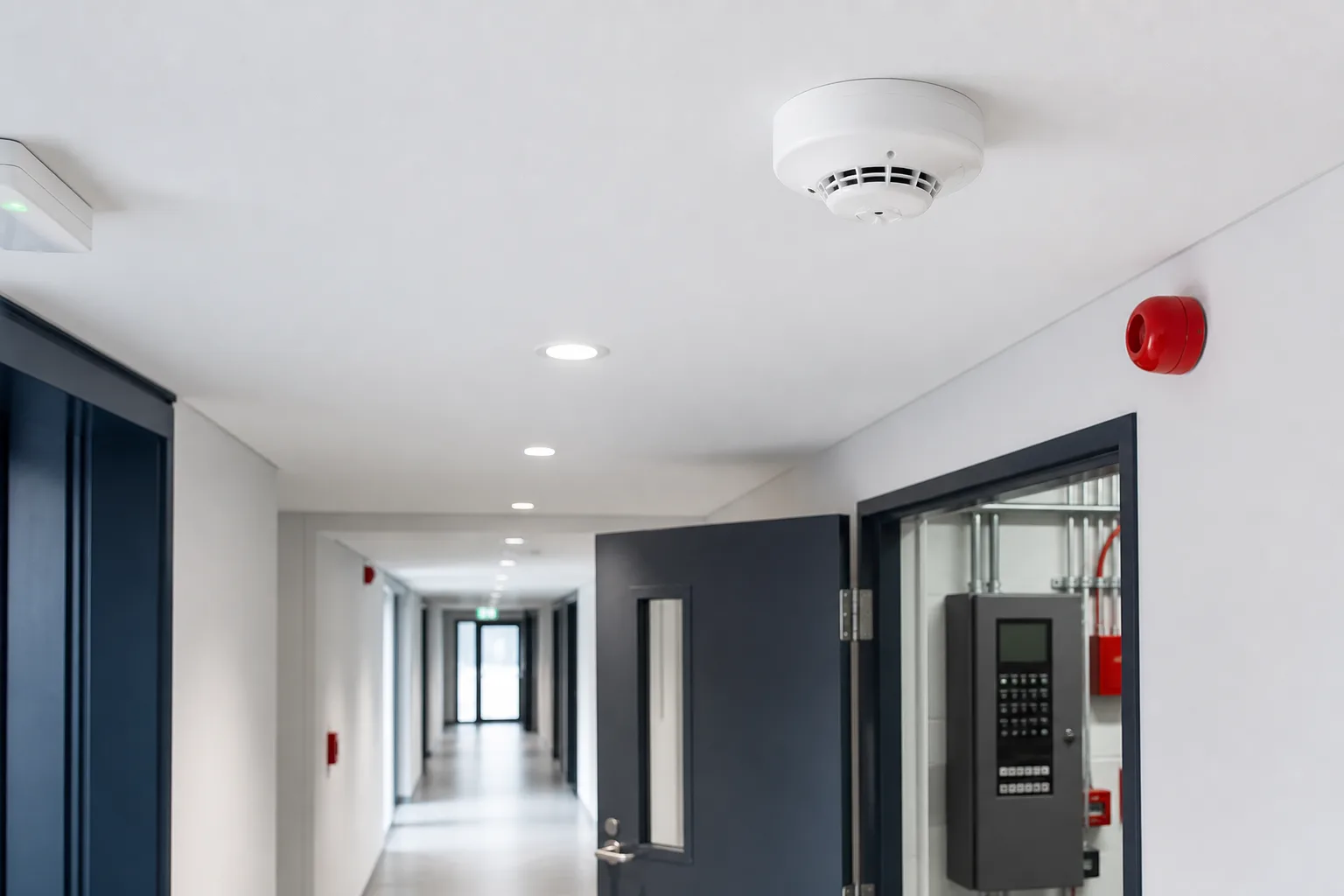
Every fire detection installation is a chain: sensing devices matched to the risks of each space, addressable panels that pinpoint exactly which device has activated, notification that alerts occupants and responders, and monitoring that supervises the health of the entire system continuously.
Fire detectors sense one or more of the phenomena of combustion, smoke, heat, and radiation, and the right technology differs room by room: a kitchen, a server room, an atrium and a warehouse each demand different sensing strategies.
We design fire detection as part of the wider life safety picture, from the detector on the ceiling to its integration with voice evacuation and the building’s security systems.
━━ Capabilities
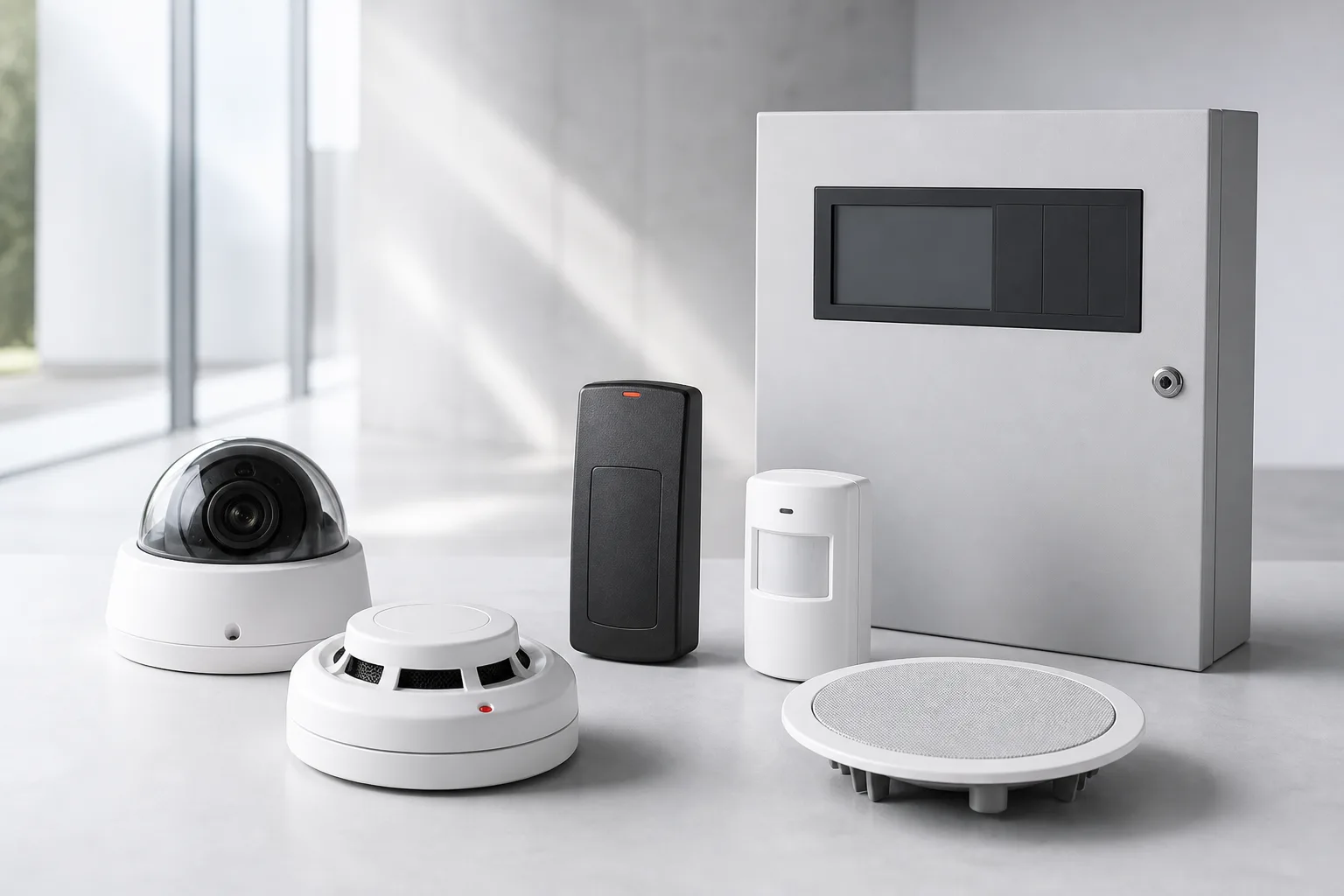
The elements of a complete system.
● Smoke detection
Optical sensing that identifies the particles of combustion early, often before flames are visible.
● Heat detection
Fixed-temperature and rate-of-rise sensing for environments where smoke detection would be unreliable, such as kitchens and dusty areas.
● Multisensor detection
Detectors combining smoke and heat sensing (and further criteria) that evaluate multiple signals together, faster genuine detection with far fewer false alarms.
● Addressable fire panels
● Alarm notification
Sounders, visual alarm devices and interfaces to voice evacuation, ensuring the alarm is perceived throughout the protected premises.
● System monitoring
● Voice evacuation integration
● Security system integration
● False alarm reduction
● Scalable architecture
Bosch technology
Detection intelligence at the sensor.
Bosch fire detection technology places intelligent signal processing inside the detector itself. Multi-criteria detectors evaluate smoke, heat and further combustion characteristics together, so the decision to alarm is based on the pattern of a real fire, not a single easily fooled reading.
Addressable panel architecture identifies precisely which device has activated and where, supports networked multi-panel systems for large sites, and interfaces directly with Bosch voice evacuation platforms so that detection and evacuation operate as one coordinated life safety response.
━━ Life safety first
Designed around people, then property.
In hospitals, hotels, terminals and public buildings, a fire system’s first job is protecting people who may be asleep, unfamiliar with the building or unable to evacuate unaided. That reality shapes everything: earlier detection thresholds, phased evacuation strategies, redundancy in critical paths.
The same rigour then protects assets and operations, because for a port, a data-rich office or a warehouse, even a small fire or a false-alarm shutdown carries real cost.

━━ Related solutions
Pairs naturally with
━━ Next step
Design a video system around your site.
Tell us what you need to see, verify and understand
We’ll design the camera plan, analytics and management platform to match.